Toning Your Lower Back – An Essential Guide
Toning your lower back is essential for maintaining good posture, avoiding injury, and enhancing your overall fitness. It’s often overlooked in favor of more HIIT-style exercises, but in reality, strengthening your lower back should be seen as an integral part of your overall fitness routine. If you want to say goodbye to lower back pain, tightness, and weakness, then its time to start toning your lower back.
The best place to start? Lower back exercises. From bridges to planks, to bird-dog exercises and other core motions, there are a variety of exercises that can target your lower back muscles. When you do lower back exercises, it’s important to maintain proper form. Keep your body in a straight line when doing planks, and move slowly and steadily when doing bridges. You should also be sure to use breathing control during each exercise, inhaling and exhaling in rhythm.
No lower back routine is complete without stretches. Stretching your lower back regularly helps to slacken tight muscles that can often hinder your bodys movement potential. Start by lying down on your back with your feet flat, knees bent, and arms extended at shoulder level. Then, slowly drop your knees and feet to the left until you notice a stretch hold for 15 to 30 seconds and repeat on the other side. Cat-cow stretches are another great way to loosen and tone up your lower back.
Foam rolling can also be beneficial for your lower back. When foam rolling, use your full bodyweight to distribute pressure doing so helps loosen and release tight muscles. Start by rolling your glutes, then move up to target your lower back muscles. Make sure you roll slowly along each muscle, slowly moving your entire body in a back-and-forth motion.
Yoga is an amazing way to improve posture, flexibility, and overall strength. Specific postures like Cobra, Upward Facing Dog, and Childs Pose target the lower back muscles. When doing yoga, focus on your body’s alignment. This will help ensure that you are training your lower back in the most beneficial way possible.
Cardio exercises are beneficial for your lower back, helping to increase blood flow and oxygen supply while also improving muscle endurance. Walking, swimming, and cycling are all good cardio options. Swimming, in particular, can be excellent for toning your lower back, as the buoyancy of the water supports your bodyweight when you kick your legs.
Strength training is an important tool for toning your lower back. Weight-bearing exercises like squats, rows, and pull-ups can all help to strengthen the back muscles, which in turn helps to prevent pain and fatigue. Aim for 15 to 20 repetitions per set, with a short rest period between sets.
Bodyweight exercises are great for toning your lower back because they make it possible to work the muscles and get the blood flowing, without the need for extra weights. Good exercises include hanging leg raises, mountain climbers, and superman planks. When doing these exercises, be sure to maintain good posture and control over your body, as this will help to ensure that you’re getting the most out of each motion.
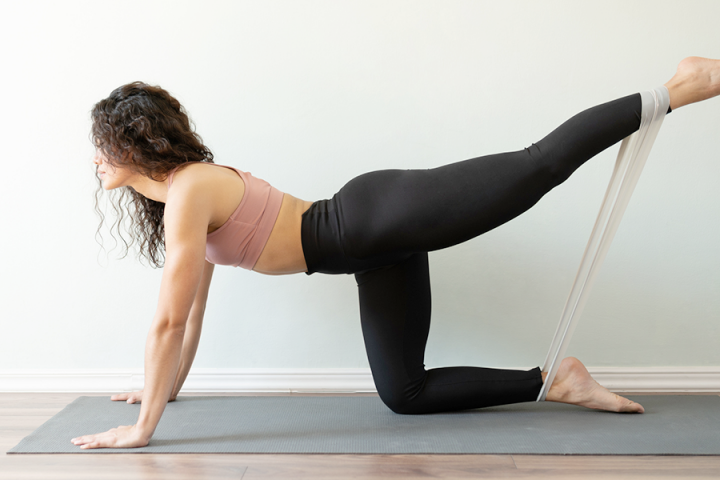
Using resistance bands is a great way to work your lower back muscles without putting too much pressure on them. Try standing rows or holding a plank with a resistance band around the center of your lower back. Keep your core tight and controlled while doing these exercises to really hone in on your lower back muscles.
Exploring different exercise equipment can also be beneficial for toning your lower back. Cable pulldowns and abdominal machines both target specific lower back muscles, helping to strengthen the area. Gyms often provide more specialized machines for targeting the lower back, so enquire at your local facility for access to these.
Finally, don’t forget about the importance of your diet and lifestyle in keeping your lower back toned. Make sure to eat foods that are rich in essential vitamins and minerals, such proteins, complex carbohydrates, and omega-3 fatty acids. Also, get into the habit of maintaining proper posture, as poor posture can really take a toll on your lower back muscles.
Toning your lower back gives you strength, stability, and flexibility in your core muscles, which in turn can lead to a better posture and improved mobility. Regular exercise, stretching, and foam rolling are all excellent ways to help ensure that your lower back remains strong. And when it comes to strength training, don’t underestimate the benefit of using resistance bands for lower back exercises it’s an accessible and cost-efficient way to maintain your body.
Cardio exercise is also important, as it can help to build more muscular endurance in the lower back area. Swimming and cycling are both good options, as they involve movements which require the whole body to be engaged and active, rather than just isolating certain muscles. Don’t forget to eat foods that are high in essential vitamins and minerals, all while keeping good posture during your day-to-day life.
Incorporating all of these elements into your lifestyle can really help to tone and strengthen your lower back. The process can take time and dedication, but it is worth it in the end. So, if you want to invest in a stronger lower back that can enable you to perform more effectively in a variety of activities, then it’s time to start toning your lower back.
In Part 2 of this series, we’ll be exploring more ways to strengthen your lower back muscles. These will involve dynamic yet low-impact exercises such as leg circles, lunges, and core drills. Not only can these exercises help to condition and tone your lower back muscles, but they can also be done in the comfort and safety of your own home.
Part 3 will cover stretching techniques specifically for the lower back. We’ll be diving into recommended stretches, such as the lying lateral stretch, bodyweight side-bends, and standing twisting poses. Stretches like these can help to improve the flexibility and mobility of your lower back muscles, relieving tension and pain.
Part 4 will explore how strength training with weights can target the lower back muscles. We-will be looking at what types of weights to use, what repetitions you should aim for, and how to safely integrate weight lifting into your strength program. From barbells and dumbbells, to kettlebells and sandbags, we’ll be exploring the many tools of the weight-lifting trade.
And lastly, Part 5 will go in-depth into how to activate the lower back muscles during exercise. We’ll be discussing how to warm up correctly before a workout and what cues can be used to activate the lower back muscles during movements, such as squats, planks, and pull-ups. By activating the lower back muscles, you can ensure that they get the most out of your workout and prevent injury in the long run.
We all know that toning your lower back is an essential part of overall fitness and well-being, yet many struggle to make progress in this area. In this series, we’ll be exploring the best exercises, stretches, and weight-training tools to help you get your lower back in shape. So, take the plunge and start transforming your lower back today your body will thank you!