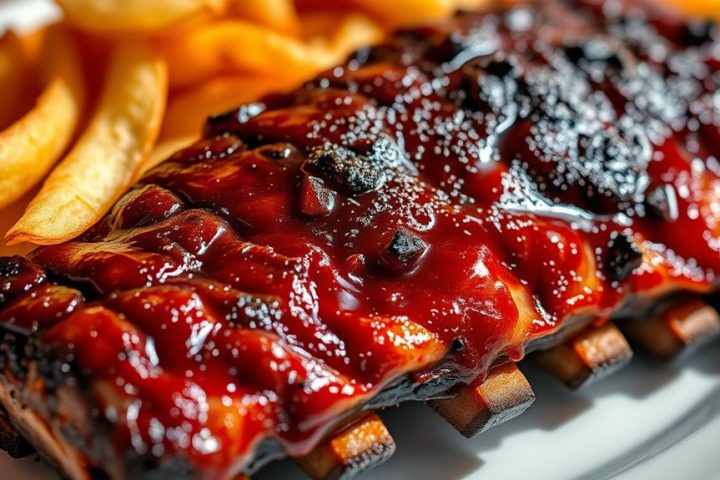
When enjoying baby back ribs and chips, you should be aware of the saturated fat content. A typical serving of baby back ribs (about 3 ounces) contains around 8 grams of saturated fat. If you add regular fried chips to your meal, that can contribute another 2 to 6 grams of saturated fat, depending on how much you eat and how they're cooked. To make healthier choices, consider the cooking methods and the portion sizes of both the ribs and chips. There's a lot more to optimizing your meals effectively, so keep going for more insights.
Understanding Saturated Fat
Saturated fat, a type of fat found in various foods, plays a significant role in your diet and health. Unlike unsaturated fats, which can have beneficial effects on heart health, saturated fats tend to raise your LDL cholesterol levels. This can increase the risk of heart disease and stroke if consumed in excess.
You'll typically find saturated fats in animal products like meat and dairy, as well as some plant oils, such as coconut oil. Understanding the sources of saturated fat in your diet is vital for making informed dietary choices.
The American Heart Association recommends limiting saturated fat to less than 6% of your total daily calories for peak health. This means if you consume a 2,000-calorie diet, you should aim for around 120 calories from saturated fat, which equals about 13 grams.
Being aware of your saturated fat intake helps you balance it with healthier unsaturated fats, contributing to a more heart-healthy diet.
Nutritional Breakdown of Baby Back Ribs
Baby back ribs are a popular dish known for their rich flavor and tender meat. When you enjoy a serving, you're not just indulging in taste; you're also consuming various nutrients. A typical serving of baby back ribs (about three ounces) provides approximately 250 calories, primarily from protein and fat.
You'll find that these ribs are a great source of protein, offering around 20 grams per serving. This makes them beneficial for muscle repair and growth. However, they also contain significant amounts of fat, with about 18 grams, which includes both saturated and unsaturated fats.
In addition to protein and fat, baby back ribs provide essential vitamins and minerals. They're particularly rich in iron, which is vital for oxygen transport in your blood, and zinc, important for immune function. You'll also gain some B vitamins, aiding in energy metabolism.
While they can be part of a balanced diet, moderation is key, especially considering their calorie density and fat content. By being aware of the nutritional breakdown, you can make informed choices about incorporating baby back ribs into your meals.
Saturated Fat Content in Chips
When enjoying a meal featuring baby back ribs, you might also reach for a side of chips, which can greatly impact your overall fat intake. Chips, whether they're potato, tortilla, or another variety, often contain higher levels of saturated fat than you might expect. This is especially true when they're fried, as the cooking process can introduce additional fats.
Here are some key points to reflect on regarding the saturated fat content in chips:
- Type of Chips: Different varieties can have varying levels of saturated fat. For example, traditional potato chips typically contain more than baked options.
- Serving Size: Be mindful of portion sizes. A standard serving of chips is often less than what you might typically consume, which can lead to underestimating your saturated fat intake.
- Ingredients: Check the ingredient list. Some chips include oils that contribute higher saturated fat levels, so reading labels is essential.
Comparing Different Cooking Methods
Cooking methods can considerably influence the saturated fat content in your meals, particularly when it comes to baby back ribs. When you choose to grill or bake your ribs, the excess fat can drip away, reducing the overall saturated fat content. This method allows for a more flavorful result while keeping the fat levels in check.
On the other hand, frying ribs—whether deep-fried or pan-fried—adds significant saturated fat. The cooking oil absorbs into the meat, increasing your total fat intake.
Slow-cooking or braising can also lead to higher saturated fat levels, especially if you use fatty cuts or sauces rich in oils or creams.
When you prepare baby back ribs, consider how each method affects not just the flavor but also the health aspects. While grilling or baking might seem more favorable, the choice of seasoning and accompanying sauces can also alter the saturated fat content.
Tips for Healthier Choices
Making healthier choices involves more than just selecting the right cooking method; it also encompasses the ingredients and accompaniments you choose.
When it comes to baby back ribs and chips, you can greatly reduce saturated fat and enhance nutrition by being mindful of your selections. Here are some tips to guide you:
- Opt for leaner cuts: Choose pork ribs with less visible fat. Look for options labeled as "lean" or "extra lean" to minimize saturated fat content.
- Marinate wisely: Use herb-based marinades instead of sugary or creamy sauces. This not only adds flavor but also cuts down on excess calories and unhealthy fats.
- Pair with healthier sides: Instead of traditional chips, consider baked sweet potato fries or a fresh salad. These alternatives provide nutrients and fiber without the added saturated fats.
Conclusion
To sum up, while baby back ribs can pack a hefty amount of saturated fat—often around 10 grams per serving—chips can add another 2 to 5 grams, depending on the type. Picture your plate: succulent, tender ribs glistening with sauce beside a mound of crispy chips. This indulgent feast, though tempting, can tip the scales on your daily saturated fat intake. By choosing leaner cuts and baked chips, you can enjoy the flavors without the excess fat.


